Sustainability in the Kita in Harburg: Hands-on Environmental Education, from the Group Room to Home
 Arianne Vogt
Sustainability in the Kita in Harburg: Hands-on Environmental Education, from the Group Room to Home
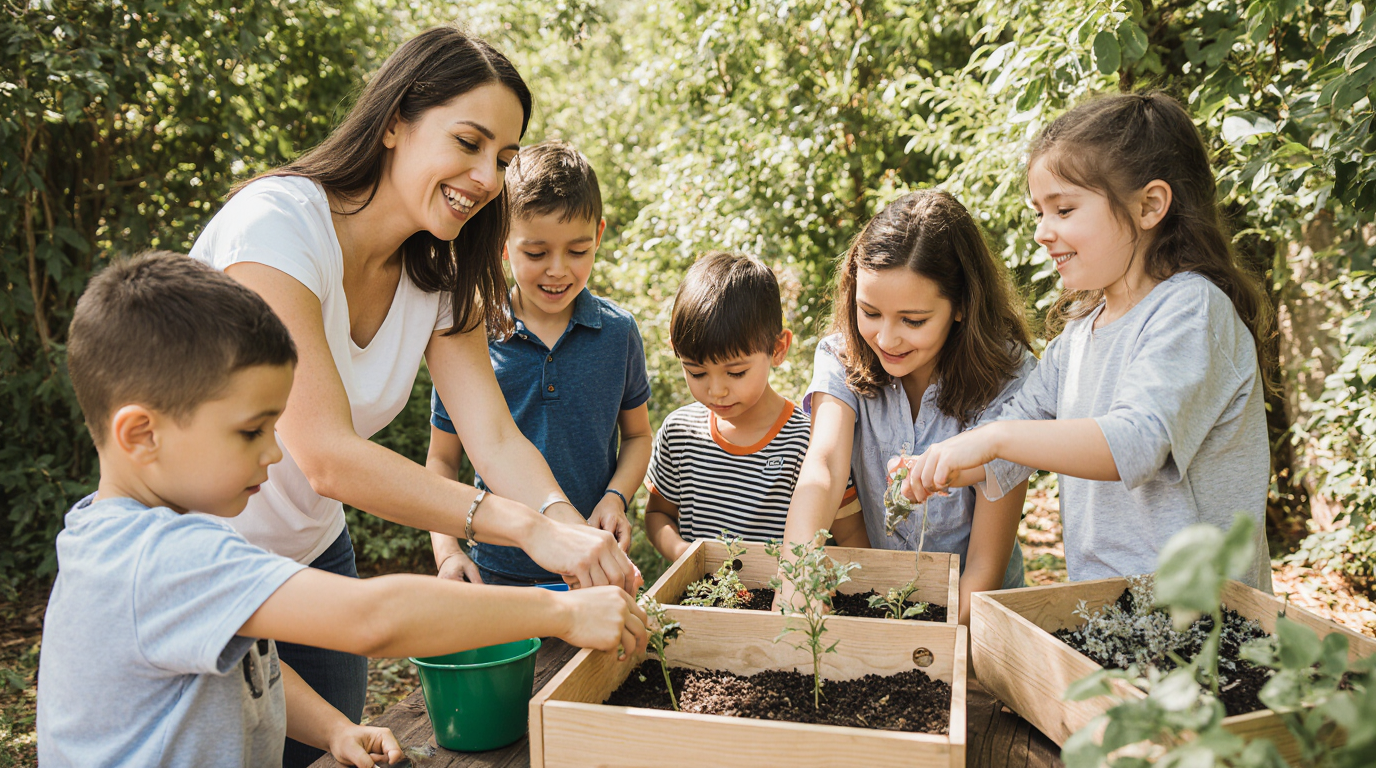
Children learn environmental protection not through explanations, but through dirt on their fingers, sorted yogurt cups, and the feeling that they can make a difference themselves. What happens in Kita during meals, outdoors, when crafting, and in the morning circle can easily be continued at home.
Briefly explained: The term Education for Sustainable Development, or ESD, is a pedagogical approach. Children should experience responsibility for their environment as a normal part of their day, not as a special topic. For families in Harburg and throughout southern Hamburg, this practically means: sustainability is evident in small, recurring actions that children are allowed to perform themselves.
What does sustainability mean for children under six years old?
A three-year-old can't make much sense of the word "climate protection." But they notice very precisely whether the water keeps running while brushing their teeth. They also notice when the cress on the windowsill starts to sprout or whether a broken toy is repaired or thrown away. This is exactly where environmental education in Kita comes in: with experiences that children make with all their senses.
The Stadtküken Kita Glockenturm in Harburg is set to operate according to this principle from February 2027. The Stadtküken's pedagogy is based on three pillars: nature, mindfulness, and participation. Instead of individual project weeks, an everyday life is planned where sustainability is simply part of it, from watering to tidying up. General information about the Kita landscape in the district can be found in the overview of Kitas in Harburg.
So you can quickly see how Kita and family can work together, here's an overview of the four areas of life in this article:
| Area of Life | How it can look in Kita | How you can pick it up at home |
|---|---|---|
| Food | Growing herbs and vegetables in a raised bed, sorting leftovers | Sowing something together on the windowsill |
| Outdoors | Forest days in all weather, collecting natural treasures | A regular family outing into nature |
| Materials | Upcycling, swap shelf, repairing | Swapping instead of buying new, mending together |
| Participation | Small roles like "energy monitor" | Letting children choose household tasks themselves |
How does sustainability get on the table at mealtime?
Food is perhaps the most direct access point. Anyone who has ever pressed radish seeds into the earth, watered them for weeks, and then pulled out their own radish will eat it with different eyes. A small raised bed or a few pots with herbs are enough for this. Garden projects are particularly suitable for children between three and six years old. They also train fine motor skills, as grasping seeds is precision work.
It continues after the meal. What goes into which container? The banana peel belongs somewhere else than the yogurt cup. Waste separation works even in the nursery if the containers are clearly distinguishable.
For home: Sow something with your child that grows quickly, such as cress in an empty eggshell. Afterwards, let them decide where the leftovers go when clearing the table. The important thing is not that everything is perfectly sorted. Your child should feel that their decision matters.
Outdoors: Why are forests and parks such good learning environments?
Children protect what they know and love. That's why being outdoors is central to any nature-based pedagogy. During regular forest days, even in rain and mud, children experience seasons and get to know animals, plants, and sounds. Incidentally, they find play materials that cost nothing: sticks, stones, chestnuts, moss.
For the Kita Glockenturm, a protected inner courtyard and outdoor areas with old trees are planned. For excursions, the Harburg City Park is easily accessible. Nature is not somewhere far away, but right on the doorstep.
Honestly: outdoor projects depend heavily on weather and season. A bed rests in winter, and some weeks are more indoors-focused. This is not a problem, but part of the lesson: nature has its own rhythm.
Plan a regular family forest day, for example, once a month. Give your child a small cloth bag and let them collect three "treasures." At home, you can arrange them into a picture on the table. This trains attention to detail and only requires you, a little time, and weatherproof clothing.
Materials: What happens to yogurt cups, egg cartons, and the like?
Children love to build something new from seemingly worthless things. That's exactly what upcycling is: waste gets a second purpose. An egg carton becomes a caterpillar, a paper towel roll a telescope, a can with a few pebbles a rattle. Even small children understand the message behind it: not everything that is empty is automatically trash.
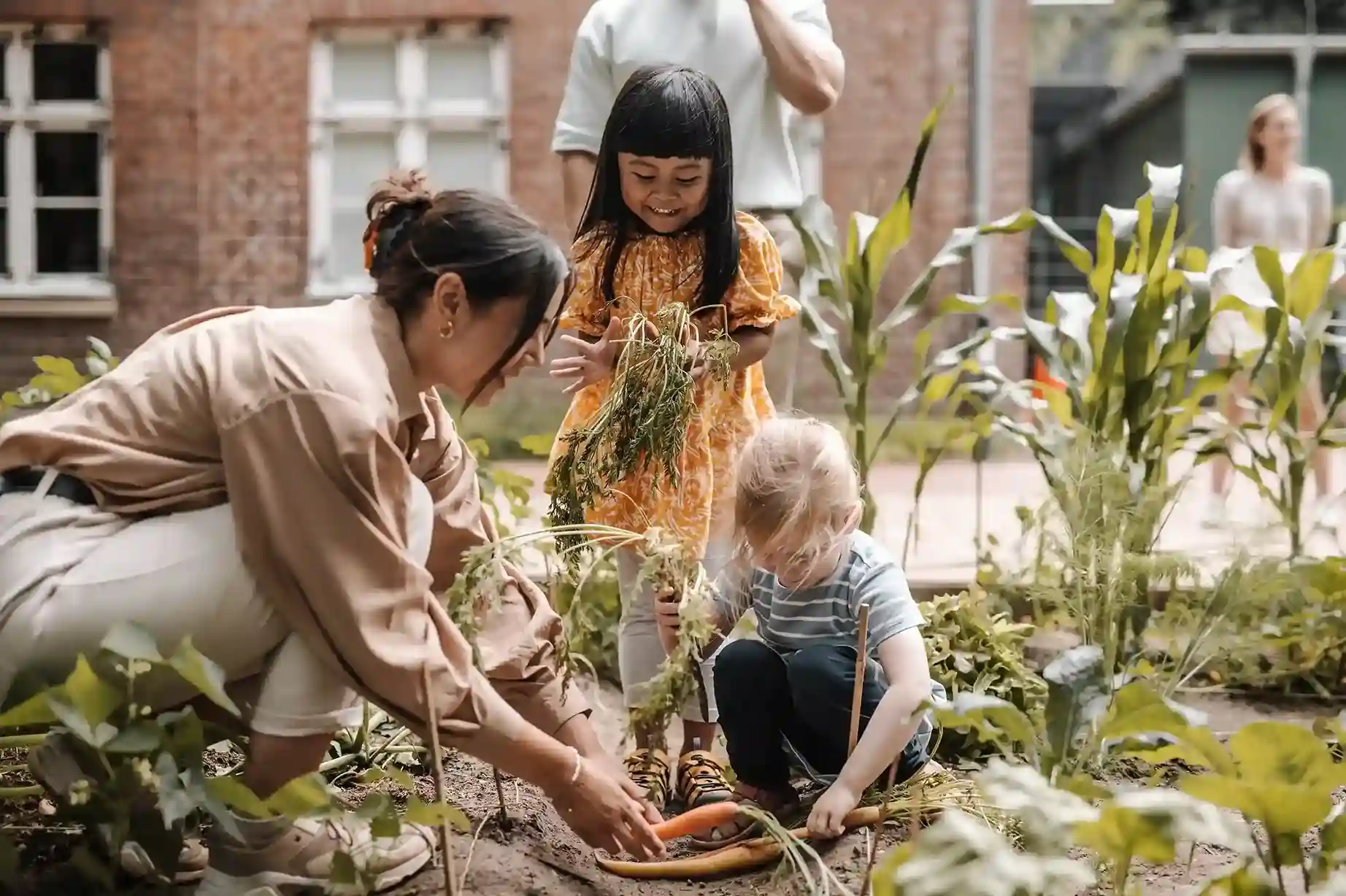
For this to work, simple structures help. A collection box for craft materials fills up almost by itself. Color-coded trash cans turn sorting into a game. A swap shelf for clothes or toys shows that things can be passed on. And if a picture book tears, it's glued instead of replaced.
When it comes to toys, it's also worth looking at the material. Natural materials like wood, stones, or chestnuts are increasingly replacing plastic in many Kitas. Fittingly, the Kita Glockenturm is to be built in a listed brick church, supplemented by a new floor in timber construction. So an old building gets a new purpose, and that's essentially an idea that fits well with the theme.
For home: Set up a "treasure chest" for clean packaging. If the weather is bad, build something from it. And before buying a new toy, ask yourself: Is it perhaps available for swapping among friends?
Participation: How can children participate in environmental protection?
Sustainability only becomes an attitude when children shape it themselves. Participation is therefore an integral part of the Stadtküken pedagogy. In practice, this can be small roles: one child is the "energy monitor" this week and checks whether the lights are off when leaving. Another takes care of watering. In the morning circle, the group decides which plant will go into the bed next.
Such tasks require guidance. More abstract topics like saving electricity are more suitable for preschoolers. Nursery children are well occupied with sorting cups or watering a plant and are just as proud.
Be careful with lecturing and guilt-tripping. A "You're wasting water!" usually has the opposite effect on children. Anyone who experiences environmental protection as a prohibition or reproach loses interest in it. And it is precisely personal motivation that sustains sustainable behavior. Praise for participation is much more effective than criticism of mistakes.
For home: Let your child choose a "family role," such as light control in the evening or watering the balcony plants. Children surprisingly reliably stick to tasks they have chosen themselves.
Conclusion: Small actions, big impact
Environmental education doesn't require expensive materials or a huge garden. It thrives on repetition, role models, and genuine participation. If Kita and family start in the same places, sustainability becomes second nature to your child: at mealtimes, outdoors, when crafting, and in small decisions. In Harburg, the Stadtküken Kita Glockenturm plans an everyday life from February 2027 that combines nature, mindfulness, and participation. If you want to know if the concept suits your family, you can arrange a consultation appointment via the Stadtküken homepage. More insights into the approach are also offered on the page about sustainable Kita everyday life at Stadtküken.
FAQ
From what age can my child participate in environmental topics? Even in the nursery, for example, by sorting into color-coded containers. Garden projects and upcycling are suitable from about three years old, games about saving electricity are more for preschoolers.
Do we need our own garden to participate at home? No. A windowsill with a few pots, a craft box, and regular outings into nature are completely sufficient. Swapping and repairing can be done in any apartment.
Isn't the topic too complicated for small children? Not if it becomes tangible. Children don't understand climate data, but they do understand that a plant wilts without water or that an empty carton can become a new toy.
What do I do if my child doesn't want to sort trash? Make a game out of it and take the pressure off. Who sorts fastest, which color belongs where? And consistently set an example yourself, because children primarily pick up habits from you.
When does Kita Glockenturm open and how many places are planned? The opening is planned for February 2027 at Neue Straße 44 in Hamburg-Harburg. Approximately 170 places are planned for children aged 0 to 6, divided into six nursery and five elementary groups. Opening hours are planned from Monday to Friday from 07:00 to 17:00, and the Harburg Rathaus S-Bahn station is about a five-minute walk away. How your child's start can be gentle is described in the guide to settling in at Kita.
Will the Kita-Gutschein (Kita voucher) be accepted? Yes, the Stadtküken accept the Kita-Gutschein. If you live in Harburg, the Harburg District Office is responsible for the application. Everything about the process is explained in the article on the Kita-Gutschein in Harburg. For questions about places, Sara Jakimovski from the Kita place consultation can be reached at 0151 112 180 32 or betreuungsvertrag@stadtkueken.de.
Note: This guide provides general orientation on the topic of environmental education in Kita. For your personal situation and questions about your child, it does not replace an individual conversation with experts.
👤 About the Author
Arianne Vogt works in the Stadtküken editorial team and prepares topics of early childhood education in an understandable way for parents. Her focus is on nature-based pedagogy and how Kita and family life can integrate well.
Sources
- National Platform Education for Sustainable Development (ESD)
- German UNESCO Commission
- Harburg District Office